
2025 was a year of development and maturation for Envision the Choptank as partners worked to strengthen capacity and resources to sustain the partnership’s work for years to come. Through collaboration, innovation, and shared commitment, the partnership continued to advance projects that improve water quality, strengthen communities, and build resilience across the Choptank watershed.
Continuing Our Work
This year, Envision the Choptank and its partners continued to make progress on multiple fronts, engaging communities, advancing green infrastructure projects, and expanding technical assistance.
Engaged 12 jurisdictions and helped to advance 9 green infrastructure projects through the Technical Assistance Circuit Rider program with the Center for Watershed Protection.
Completed implementation of Jonestown stormwater improvements and septic upgrades.
Received renewed funding to continue the Technical Assistance Circuit Rider position through December 2027.
Engaged 8 Community Ambassadors across 3 local communities.
Facilitated a LEAD 2.0 field trip to learn from our Baltimore colleagues about building community resilience through partnerships and existing infrastructure.
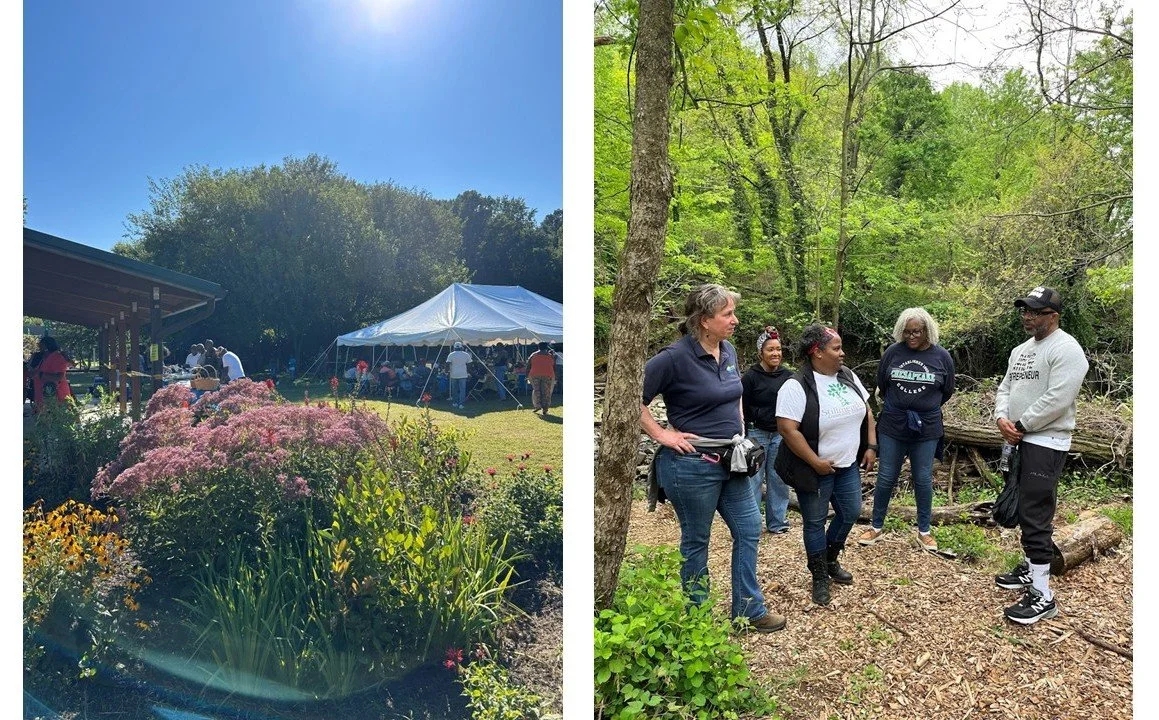
Left: Newly installed rain gardens are in full bloom at Jonestown Day in August 2025. Right: Participants in LEAD 2.0 learn from partners at Stillmeadow Community Projects and Interfaith Partners of the Chesapeake.
Securing Resources
Envision the Choptank secured significant new funding in 2025 to expand its impact and sustain ongoing initiatives across the watershed, including:
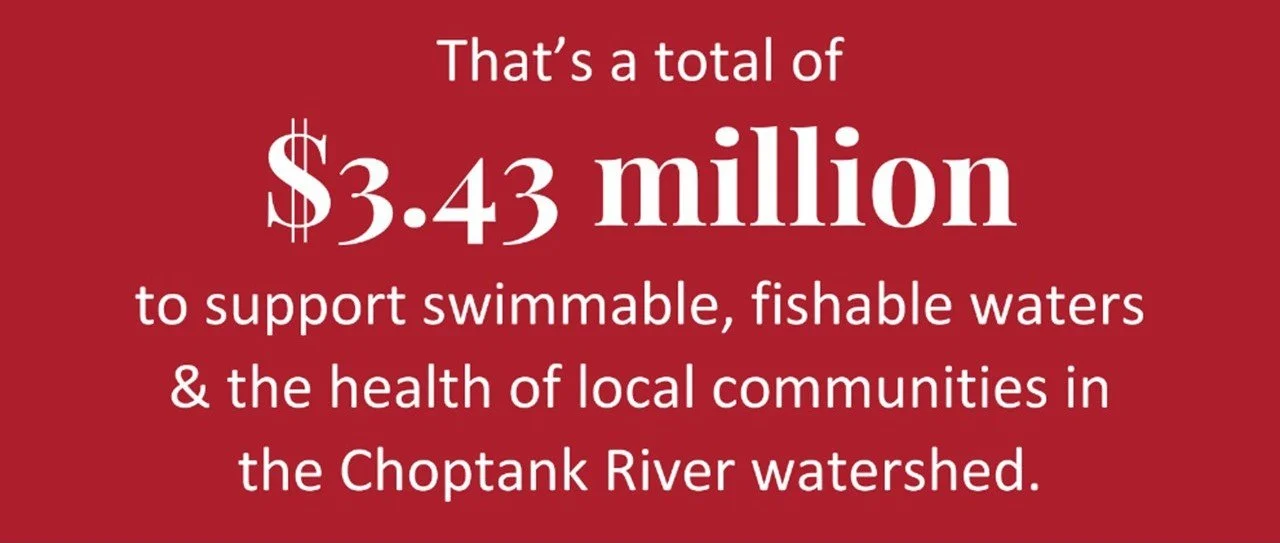
$2 million from Maryland’s Whole Watershed Fund to support agricultural, stormwater, and fish passage projects in the Upper Choptank watershed.
$1.08 million from the Environmental Protection Agency’s Sewer Overflow and Stormwater Reuse Municipal Grants Program to address infiltration and inflow in the Town of Ridgely’s sewer system.
$150,000 from the National Fish and Wildlife Foundation’s Small Watersheds Grant program to launch the Producer-led Bundling Agricultural Practices Program, supporting farmer-led groups in identifying multiple best management practices within particular focus areas.
$150,000 from the National Fish and Wildlife Foundation’s Chesapeake WILD program to support overall partnership coordination and complement the Upper Choptank Whole Watershed Project.
$25,000 from The Campbell Foundation to support implementation of the LEAD the Shore program in spring 2026.
$25,000 from the Chesapeake Bay Trust’s Green Streets, Green Jobs, Green Towns program to develop concept plans to address stormwater flooding in a Caroline County community.
Strengthening Our Capacity
To ensure long-term success, Envision the Choptank focused on building internal capacity and strengthening partnerships across sectors.
Established an Agricultural Advisory Group and began development of the new Producer-led Bundling Agricultural Practices Program.
Worked with NOAA and student researchers to advance a Choptank Tidal Wetland Resilience Assessment & GIS Analysis.
Initiated hiring for two new partnership capacity positions: a Community Engagement Coordinator and Agricultural Landowner Assistance Coordinator.
Facilitated a peer-to-peer learning opportunity with Lancaster Clean Water Partners focused on agricultural technical assistance and collaboration.
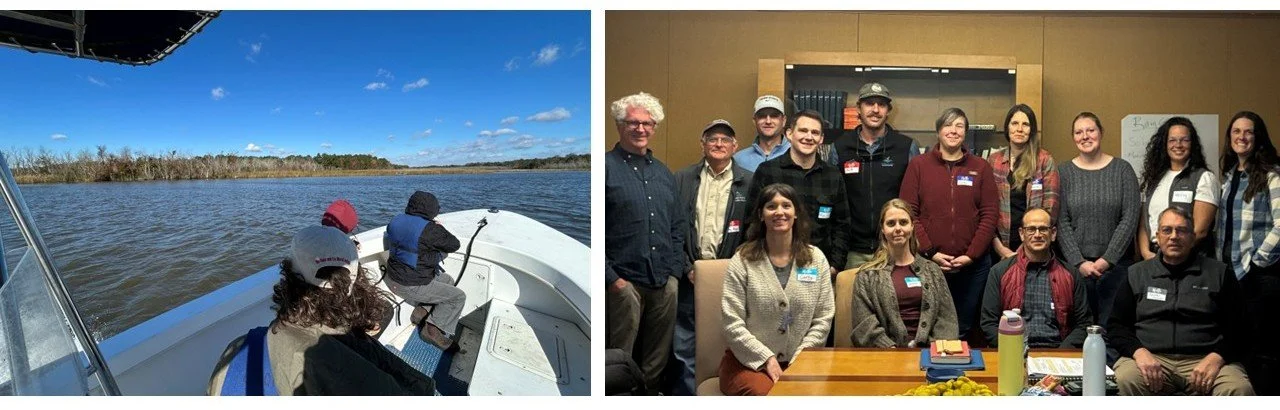
Left: Graduate students from the University of Michigan School for Environment and Sustainability join Matt Pluta, Choptank Riverkeeper, for a day on the water to ground-truth their research on tidal wetland adaptation. Right: Envision partners participate in a learning exchange with colleagues at Lancaster Clean Water Partners to share knowledge and experience around agricultural technical assistance and collaborative work.
Your commitment makes this partnership possible. Thank you for your support throughout this year and in the next! To get involved, email envisionthechoptank@gmail.com.